

『Flow Meter Reader Devices: Automated AMR and AMI Smart Utility Network Billing Sizing』Related information(flow rotameter|digital flow meter|balo meter|hydraulic flow meter|volumetric meter|positive displacement meter|pitot tube flow meter|displacement meter|cfm meter|variable area flow meter|inline flow meter|differential pressure flow meter|calibrated flow meter|velocity meter|paddle wheel flow meter|oval gear flow meter|anemometer hvac|multiphase flow meter|doppler flow meter|thorpe tube flowmeter|heat flow meter)
Flow Meter Reader Devices: Automated AMR and AMI Smart Utility Network Billing Sizing
Quick Answer: For AMR and AMI billing networks, select a flow meter with pulse, RS485 Modbus, or 4-20 mA HART output. Silver Instruments electromagnetic flow meters fit most water and wastewater billing applications. Oval gear and vortex meters cover diesel and steam billing. Send us your pressure (bar), temperature (°C), pipe size (DN), and flow range for a direct model recommendation.
AMR means automated meter reading. AMI means advanced metering infrastructure. Many engineers use the terms together, but they are not the same thing. AMR is a one way system. A meter sends data to a handheld receiver or a drive by unit. AMI is a two way fixed network. The meter talks to a collector, and the utility can send commands back.
In billing applications, the first priority is data trust. A utility in Malaysia told us that one wrong pulse count per week causes more billing disputes than a 3 percent flow error. So the output signal matters as much as the sensor accuracy.
Do You Need a Separate Flow Meter Reader Device?
Most AMR and AMI projects do not need a separate optical reader attached to the meter dial. That approach is common for legacy mechanical meters. For new billing installations, you order the flow meter with a built in pulse or Modbus output. The meter itself becomes the reader device. This cuts wiring time and removes one battery or one optical sensor from the network.
What Changes When You Move from Manual Reading to AMR
Manual reading gives you a number once a month. AMR gives you a pulse total every hour or every day. AMI gives you interval data every 15 minutes plus alarms. That changes the flow meter selection. A mechanical totalizer works for manual reading. A pulse or Modbus output becomes a hard requirement for automated billing.
We have seen this mistake on customer sites many times. A plant installs a good flow meter but forgets to specify the output board. Later the AMI contractor has to add an external display reader. The result is extra cost and one more failure point.
AMR vs AMI in Billing Networks
AMR suits small municipal water networks with 200 to 2,000 meters. A drive by vehicle collects readings once per month. The flow meter only needs a pulse output and a battery powered register.
AMI suits district metering zones, city wide water systems, and industrial estates. Fixed collectors or NB IoT gateways read meters every 15 minutes. The flow meter often needs RS485 Modbus RTU. The utility also wants empty pipe detection, reverse flow alarms, and low battery flags.
Which Flow Meter Outputs Work with AMR and AMI
Four output types cover most billing networks. Pulse output sends one dry contact or transistor pulse per volume unit. RS485 Modbus RTU sends flow rate, total, and diagnostic data. 4-20 mA HART works well in plants with existing PLC or SCADA wiring. NB IoT or LoRaWAN modules are usually external, not built into the meter sensor.
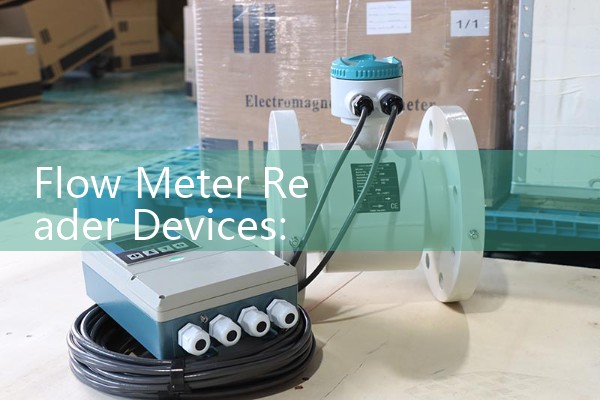
Silver Instruments electromagnetic flow meters can be ordered with pulse, RS485 Modbus, or 4-20 mA HART. The pulse resolution is configurable. For a DN50 meter, one pulse can equal 0.01 m3, 0.1 m3, or 1 m3. And this matters for billing resolution. A small pulse unit gives finer audit data but faster register rollover.
Sizing for Billing Meters: DN, Flow Range, Accuracy
Billing sizing starts with the pipe size and normal flow velocity. For electromagnetic flow meters, the best accuracy window is 0.5 to 10 m/s. Below 0.3 m/s the error can drift. Above 12 m/s you may see liner wear in water with sand.
Use these field rules. DN15 to DN25 for chemical dosing and small pilot lines. DN50
Do not size a billing meter only by pipe diameter. Calculate the minimum and maximum flow rate. Then check the meter range. A DN100 electromagnetic meter may read from 0.4 m3/h to 280 m3/h. If the minimum night flow drops to 0.2 m3/h, a smaller meter or a dual range setup may be needed.
Product Selection by Application
Water and wastewater billing: electromagnetic flow meter. Use a rubber or PTFE liner for clean water. For treated wastewater with solids, ask for a polyurethane liner and a grounding ring. Accuracy of 0.5 percent of reading is common for AMI billing.
Diesel, fuel oil, or edible oil billing: oval gear flow meter. This positive displacement meter works well in non conductive liquids. Pulse output with a high resolution of 0.001 m3 is standard. Viscosity up to 2,000 cP is supported.
Steam and compressed air billing: vortex flow meter or thermal mass flow meter. Vortex meters handle saturated steam up to 250 °C. Thermal mass meters measure compressed air in kg/h or Nm3/h. Both can send 4-20 mA HART or RS485 Modbus.
Seawater desalination and brine lines: electromagnetic flow meter with tantalum or platinum electrodes and a ceramic liner. For reverse osmosis feed lines, a DN80 or DN100 meter with 4-20 mA HART is typical.
A Real Example from Southeast Asia
A paint manufacturer in Vietnam used a mechanical water meter for factory billing. The meter was read once a month. Disputes between production and finance took hours every month. We replaced the mechanical meter with a Silver Instruments electromagnetic flow meter, DN80, with pulse output to a local RTU. The pulse unit was set to 0.01 m3. After three months, the billing variance dropped below 0.5 percent. The finance team now receives a daily total report instead of a handwritten log.
FAQ
What is the difference between AMR and AMI?
AMR is one way automatic reading, usually by handheld or drive by radio. AMI is a two way fixed network with remote interval data and commands. Billing networks with 2,000 or more meters often need AMI.
Which flow meter type is best for water billing?
An electromagnetic flow meter with pulse or RS485 Modbus output. It has no moving parts and works in dirty water. Accuracy of 0.5 percent of reading is enough for utility billing in most countries.
Can a flow meter send data directly to our billing software?
Yes. Use RS485 Modbus RTU for direct links to a PLC, RTU, or gateway. For cloud billing software, add a Modbus to NB IoT or LoRaWAN gateway. The meter does not need a built in radio.
How do I size a billing flow meter?
Send us the pipe size, minimum flow, normal flow, maximum flow, fluid type, temperature, and pressure. We check the velocity and recommend a DN size. Do not size only by pipe diameter. That causes low flow errors at night.
What information should I send for a quote?
Send us your pressure (bar), temperature (°C), pipe size (DN), and flow range. Tell us the fluid and the required output. For billing, also tell us the pulse resolution or billing interval. We reply with a model, a price range, and a lead time.
Silver Automation Instruments supplies electromagnetic, vortex, oval gear, thermal mass, and ultrasonic flow meters for AMR and AMI billing networks. Tell us your application and we will recommend a specific meter model. Contact Tel: +86-25-68650347, Whatsapp: +86-25-52155837, WeChat: +86 15365082610. Send us your pressure (bar), temperature (°C), pipe size (DN), and flow range.
 Hot Product
 Related AD