

『Flow Meter Spa Equipment Loops: Maintaining Correct GPM Rates for Water Heater Efficiency』Related information(flow rotameter|digital flow meter|balo meter|hydraulic flow meter|volumetric meter|positive displacement meter|pitot tube flow meter|displacement meter|cfm meter|variable area flow meter|inline flow meter|differential pressure flow meter|calibrated flow meter|velocity meter|paddle wheel flow meter|oval gear flow meter|anemometer hvac|multiphase flow meter|doppler flow meter|thorpe tube flowmeter|heat flow meter)
Flow Meter Spa Equipment Loops: Maintaining Correct GPM Rates for Water Heater Efficiency
Quick Answer: Spa heater efficiency drops when loop flow falls below the heater minimum GPM. Install an inline electromagnetic flow meter on the spa loop, monitor flow continuously, and set a low flow alarm before the heater high limit trips. Send Silver Instruments your pipe size, normal GPM, water temperature, and conductivity for a direct model match.
Spa equipment loops hide flow problems well. A pump can run, a pressure switch can stay closed, and the heater can still cycle on high limit because the actual GPM has dropped 20 percent. We see this pattern on commercial spa decks, swim schools, and resort pools. The water moves, but not fast enough to carry heat away from the exchanger.
Why GPM Drift Causes Spa Heater Problems
Most spa heaters need a minimum flow rate to protect the heat exchanger. A typical 400,000 BTU gas heater may need 20 to 40 GPM depending on the design. If the loop runs at 90 percent of that limit, scale forms faster, and the high limit switch opens. The heater shuts down. The operator resets it. The same fault returns a week later.
Low flow has several causes on spa loops. Sand filters load up, pump impellers wear, bypass valves get left open, and hair and lint strainers clog. A pressure switch only tells you that the pump is running. It does not tell you the true GPM. A flow meter closes the information gap. In practice, most engineers skip the flow check because the pump sounds normal.
A resort in Thailand ran a 45 GPM spa loop with a partially closed discharge valve. The pressure switch stayed closed. The heater tripped every afternoon when the filter pressure increased. The maintenance team replaced the high limit switch twice before we installed an electromagnetic flow meter and found the real problem.
Selecting a Flow Meter for Spa Loop Piping
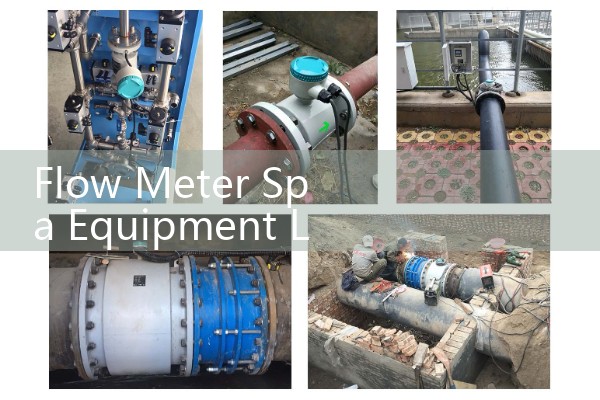
For most spa loops, Silver Instruments recommends an electromagnetic flow meter. It has no moving parts, no strainer, and no pressure drop added to the loop. It reads conductive water with chlorine, bromine, or salt systems without issue. Choose a PTFE liner for spa water up to 120 °C and 316L electrodes for chemical resistance.
Pipe sizes on commercial spa loops are normally DN25, DN40, DN50, or DN80. An inline magnetic flow meter fits these sizes directly from DN15 to DN200. For DN100 and larger, an insertion electromagnetic flow meter reduces cost and can be installed under pressure with a hot tap kit. In retrofit jobs where pipe shutdown is not possible, a clamp-on ultrasonic flow meter works on metal or rigid plastic pipe, but it needs a straight run and no air bubbles.
We do not recommend oval gear meters for chlorinated spa water. They are better for clean fuels, oils, and some chemical batching applications. Our technical team can confirm the meter type after checking your water chemistry.
Last year a customer in Vietnam asked us for a clamp-on ultrasonic meter for a DN160 spa return line. The line could not be drained during peak hours. We supplied a meter with 2 MHz transducers and the site team read GPM within one hour. For permanent installs, we still prefer an inline electromagnetic flow meter.
Installation Details That Prevent False GPM Readings
Most flow meter errors on spa loops are installation errors. For an inline electromagnetic flow meter, keep at least 5 pipe diameters of straight run upstream and 3 diameters downstream. If the meter is mounted after a pump or a 90 degree elbow, give it more distance. Air pockets cause rapid fluctuation. Mount the meter in a pipe section that stays full at zero flow.
Plastic piping requires grounding rings or a meter with built-in grounding electrodes. Without proper grounding, the signal drifts. On outdoor spa decks, use a transmitter rated for IP67 or IP68. Keep the display out of direct sun and away from chlorine dosing tanks.
Here is the thing. A flow meter installed with air in the line is worse than no flow meter because it gives false confidence. Do not place a flow meter on the suction side of a spa pump if the line can pull air at the skimmer. The meter will read flow spikes and dropouts that do not represent real loop flow.
Matching GPM Range to Heater Minimum Flow
Spa heaters do not need a huge flow turndown. Most loops ru
Set the low flow alarm around 80 percent of the heater minimum flow. If a heater needs 30 GPM, alarm at 24 GPM. The alarm setpoint gives the maintenance team time to clean the strainer or backwash the filter before the heater trips at its internal limit.
Output and Control Integration for Spa Systems
A 4-20 mA HART output from the flow meter can feed a spa controller, BMS, or pool automation panel. For boilers and water heaters, use the low flow relay on the meter to block burner firing when GPM is below the safe limit. Some sites also record flow with a paperless recorder next to a PT100 temperature probe and a pressure transmitter. The record helps when a heater warranty claim requires proof of sufficient flow.
For simple pump rooms, a local display on the meter is enough. The operator can read GPM, totalised volume, and empty pipe status. For remote sites, Modbus RTU or RS485 output allows monitoring from a central office.
We have seen many pump skids in Australia and the Middle East ship with a flow switch only. That works for basic on/off protection. It does not show a slow GPM drop. An actual flow meter gives trending, total flow, and alarm setpoints.
Maintenance and Field Checks
Electromagnetic flow meters need little routine maintenance. Inspect the electrodes once a year. If spa water has high calcium hardness, remove light scale with a soft cloth or vinegar solution. Do not use abrasive pads on the liner. Check the grounding connection and the cable shield. A loose ground is the most common cause of unstable readings on plastic pipe.
Ultrasonic clamp-on meters need clean pipe surfaces and proper coupling gel. Reapply the gel if the signal strength drops below the manufacturer recommended level. If the meter shows negative flow when the pump is off, check the empty pipe detection and zero calibration.
FAQ: Spa Loop Flow Meter Selection
Q: What flow meter works best for spa water with chlorine or bromine?
A: An electromagnetic flow meter with PTFE or hard rubber liner and 316L electrodes works best. It handles chlorine, bromine, salt chlorine generators, and ozone systems. Avoid mechanical meters unless the water chemistry is very mild.
Q: What GPM should a commercial spa heater loop maintain?
A: It depends on the heater model. A 400,000 BTU gas heater often needs 20 to 40 GPM. Heat pumps may need 30 to 70 GPM. Check the heater data plate and keep the flow at least 10 to 20 percent above the minimum.
Q: Can we install a clamp-on ultrasonic flow meter without cutting pipe?
A: Yes, if the pipe is full and the outside surface is clean. Clamp-on meters suit DN25 and larger metal or rigid plastic pipe. They are not ideal for pipe with heavy scale, air bubbles, or short straight runs. For permanent spa loops, inline electromagnetic meters cost less over time.
Q: Does a flow meter help reduce spa heater scaling?
A: Yes. Scale forms faster when flow is low and heat transfer is poor. A flow meter with a low flow alarm keeps GPM above the safe band, which helps slow scale deposition and reduces high limit trips.
Q: What details do you need for a spa loop flow meter quote?
A: Send us pipe size, pipe material, normal GPM, minimum heater GPM, water temperature, water conductivity in µS/cm, and connection type. Water viscosity for spa loops is normally near 1 cP, so we do not need that value for most quotes. Silver Instruments will reply with a model, accuracy, and price range.
Get a Spa Loop Flow Meter Recommendation
Tell us your flow range, pipe size, and water chemistry. Silver Instruments supplies electromagnetic, ultrasonic, vortex, thermal mass, and oval gear flow meters for industrial and commercial water systems. Our application engineers can check your heater minimum flow and recommend a meter with 4-20 mA HART, pulse, or Modbus output.
Contact Silver Automation Instruments. Tel: +86-25-68650347. WhatsApp: +86-25-52155837. WeChat: +86 15365082610. Send us your pipe size (DN), normal GPM, water temperature, pressure (bar), and conductivity to get a direct flow meter selection.
 Hot Product
 Related AD