

『Flow Meter Power Supply Wiring: Isolating Voltages to Prevent Ground Loop Signals』Related information(flow rotameter|digital flow meter|balo meter|hydraulic flow meter|volumetric meter|positive displacement meter|pitot tube flow meter|displacement meter|cfm meter|variable area flow meter|inline flow meter|differential pressure flow meter|calibrated flow meter|velocity meter|paddle wheel flow meter|oval gear flow meter|anemometer hvac|multiphase flow meter|doppler flow meter|thorpe tube flowmeter|heat flow meter)

Flow Meter Power Supply Wiring: Isolating Voltages to Prevent Ground Loop Signals
Quick Answer: Use one isolated 24 V DC power supply per flow meter. Ground the signal cable shield at one end only, normally at the PLC or control panel. If the reading drifts or shifts when a pump or VFD starts, install a galvanic isolator in the 4-20 mA loop before changing the flow meter.
Why Ground Loops Appear in Flow Meter Wiring
A ground loop forms when two parts of a 4-20 mA current loop sit at different earth potentials. This is common in water and wastewater plants where a magmeter is installed on a steel pipe and the PLC panel is in another room. The voltage difference can be small, often 0.3 to 3 volts. But the signal current for a flow meter is only 4 to 20 mA. A small ground current can add offset or noise to that current.
We have seen this on customer sites many times. A customer in Indonesia installed a DN100 electromagnetic flow meter on a raw water line. The display showed 5.2 m3/h with the line empty. The cause was a shield grounded at both ends. The two earth points were 1.4 volts apart. That voltage drove a current through the shield and into the meter signal reference.
Which Flow Meters Need Extra Care
Electromagnetic flow meters and Coriolis mass flow meters need the most care. A magmeter sensor produces a tiny voltage. At low flow, this can be less than 1 mV. A ground loop of even 0.5 V can swamp the signal. Vortex meters and thermal mass flow meters with 4-20 mA outputs also suffer when the loop has multiple ground paths. Oval gear flow meters with pulse outputs can show false counts.
For plastic or lined pipe, install grounding rings. This is separate from supply wiring but prevents noisy signal. In practice, most engineers skip this part until the commissioning day. Then the reading jumps when a VFD starts. Or the totalizer counts with no flow. Then the blame goes to the meter. The meter is often not the problem.
Power Supply Wiring Rules
Use one isolated 24 V DC power supply per flow meter. This is the simplest way to keep loop noise away from the signal. Check the meter manual for the allowed supply range. Silver Automation Instruments electromagnetic flow meters accept 18 to 36 V DC. The current draw is usually below 1 A. A 24 V DC supply rated for 25 W covers most flow meters. Check the supply isolation rating. Many quality supplies list 500 V DC or 1500 V AC isolation. Check the 24 V DC output for AC ripple. Keep ripple below 100 mV peak to peak for magmeter and Coriolis meter loops.
Do not use the same supply that feeds relays, solenoids, or VFD controls. If the instrument is loop powered, use an isolated loop supply. This keeps the 4-20 mA signal separate from the plant power. The negative terminal of the loop supply should not be tied to the plant earth at the field side.
Here is the thing: isolation does not mean you can add more ground points. The signal loop still needs one defined reference. That reference is usually the PLC analog input card. Tie the loop negative or common to the PLC ground only at that end.
Shield Grounding and Cable Selection
Use twisted pair shielded cable for 4-20 mA and pulse outputs. For electromagnetic and Coriolis meters, use a cable with a full shield and a drain wire. Ground the shield at one end only. The best point is at the control panel or PLC cabinet. Leave the field end floating and c
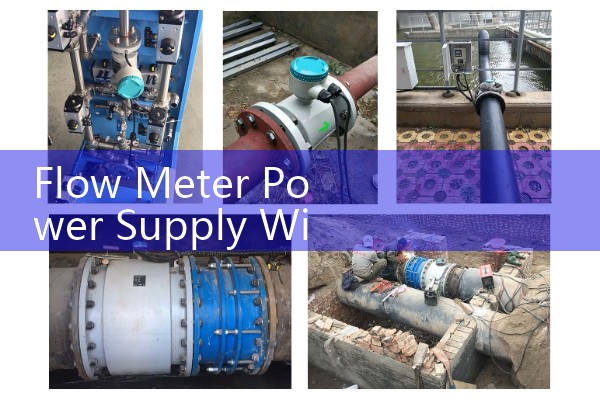
A shield grounded at both ends acts like a loop antenna and a second current path. In a chemical plant in Saudi Arabia, the ground difference between a pipe rack and the control room was 2.2 volts. The customer connected the shield at both ends. The flow signal had a 0.5 m3/h zero shift. Lifting the field shield end fixed it in 10 minutes.
When to Add a Galvanic Signal Isolator
Add a galvanic isolator when the ground difference is above 1 volt or when the cable runs exceed 100 meters. The isolator breaks the direct DC path between the field device and the control system. The 4-20 mA signal passes through, but the ground loop current cannot.
A paint manufacturer in Vietnam replaced an electromagnetic flow meter because the reading moved from 0 to 800 kg/h with the pump stopped. The new meter did the same thing. We added a loop isolator in the control cabinet. The reading went back to 0.0 kg/h. The customer kept the original meter as a spare.
Use a loop isolator with 0.1 percent accuracy or better. For HART loops, make sure the isolator supports HART pass-through. Many standard isolators block HART because they only carry the analog current. Silver Automation Instruments can supply HART compatible isolators with the flow meter order.
Recommended Silver Automation Instruments Setup
For water, wastewater, chemicals, and food liquid lines, the Silver Automation Instruments electromagnetic flow meter series covers DN15 to DN2000. Outputs include 4-20 mA, pulse, RS485, and HART. Use a separate 24 V DC isolated power supply with the meter. For mass flow, density, and temperature in one device, the Silver Automation Instruments Coriolis mass flow meter line covers small to medium flow ranges, including kg/h and t/h outputs.
Because harsh plants have wet areas, long cable runs, and VFDs, we recommend a wiring kit with each meter: isolated 24 V DC supply, twisted pair shielded cable, gland kit, and a HART compatible signal isolator for long runs. This reduces startup problems on sites in Southeast Asia, the Middle East, Africa, and Latin America.
FAQ
Where should I ground the flow meter signal cable shield?
Ground it at the PLC or control panel end only. Leave the field end floating.
Can I power two flow meters from one 24 V DC supply?
Yes, if the supply is isolated and has enough current capacity. But separate supplies make fault finding easier and reduce loop interaction.
What is a ground loop in a flow meter loop?
A small current caused by voltage difference between two earth points. It adds noise or offset to the 4-20 mA or pulse signal.
How do I know if my flow meter has a ground loop problem?
The reading changes when a pump or VFD starts. The meter may show flow with the pipe empty. The zero point may drift with no process flow.
Do Silver Automation Instruments flow meters need an external isolator?
Not always. Use an isolated supply and single-ended shield grounding first. Add an isolator for long cable runs, multiple buildings, or ground voltage above 1 volt.
Send your process data: flow range, pipe size (DN), pressure (bar), temperature (°C), and liquid type. We will recommend the correct flow meter, power supply, and isolator wiring.
Silver Automation Instruments
Tel: +86-25-68650347
Whatsapp: +86-25-52155837
WeChat: +86 15365082610
 Hot News
 Related AD