

『Coriolis Gas Flow Meter: High-Pressure Vapor Mass Measurement Devices』Related information(flow rotameter|digital flow meter|balo meter|hydraulic flow meter|volumetric meter|positive displacement meter|pitot tube flow meter|displacement meter|cfm meter|variable area flow meter|inline flow meter|differential pressure flow meter|calibrated flow meter|velocity meter|paddle wheel flow meter|oval gear flow meter|anemometer hvac|multiphase flow meter|doppler flow meter|thorpe tube flowmeter|heat flow meter)
Coriolis Gas Flow Meter: High-Pressure Vapor Mass Measurement Devices
Quick Answer: Coriolis meters measure high-pressure vapor mass flow directly, independent of density swings. They handle superheated steam, natural gas, ethylene, and hydrocarbon vapors in lines from 10 bar to over 100 bar. Silver Automation Instruments supplies these meters with ATEX Zone 1 certification, dual-phase tolerance, and flow ranges from a few kg/h up to 600,000 kg/h.
High-pressure vapor measurement in industrial plants keeps process engineers on their toes. Steam injection in refineries, ethylene transfer in chemical plants, or CO2 vapor in food processing all share one headache. Pressure and temperature changes shift gas density so much that volumetric meters lose relevance. A differential pressure device with temperature compensation helps, but only up to a point. The moment wet steam or condensate slugs hit the sensor, the reading drifts. Here is the thing. A Coriolis flow meter solves the core issue by measuring mass directly.
We have seen on customer sites in Southeast Asia where a superheated steam line ran at 32 bar and 280°C. The plant engineer wanted billing-grade accuracy for steam sent to a neighboring process unit. An orifice plate setup required constant recalibration and still gave a 2% error when quality dropped. We supplied a DN25 Coriolis meter with an Inconel tube body and an explosion-proof transmitter. The meter now reads mass flow in kg/h with ±0.15% accuracy, even when steam quality drops to 93%. No external density compensation is needed.
Why Coriolis for Vapor, Not Gas Volumetric Meters
Most gas flow meters like vortex, turbine, or orifice plates output a volumetric flow rate at flowing conditions. To get mass flow, you need a separate pressure sensor, a resistance temperature detector (PT100), and a flow computer. That chain introduces three signal errors and adds latency. For saturated steam, a 2 bar change in pressure can shift density by 15%. The math falls apart. A Coriolis meter vibrates one or two tubes at a known frequency. The phase shift between inlet and outlet sensor coils responds to mass flow rate, not volume. Density changes have zero effect on mass output.
Another overlooked advantage is two-phase tolerance. Plant start-up often sends wet steam or entrained condensate through the pipe. Vortex shedding meters output garbage data during that phase. Coriolis meters continue measuring with a slightly degraded accuracy, but they do not stop. A customer in Peru uses our meter on a 50 bar natural gas line where slugs of compressor oil appear several times a day. The meter signal stays valid, and the control room has reliable mass flow for custody transfer.
Key Sensor Design for High-Pressure Service
Tube wall thickness and material define the pressure envelope. For gas and vapor above 40 bar, we specify thick-wall duplex stainless steel or Hastelloy C22 tubes. Silver Instruments standard high-pressure Coriolis meters handle 100 bar at 150°C and 63 bar at 300°C. The process connection type matters. We recommend flanged connections (ASME B16.5 Class 600 or above) because high-pressure vapor lines rarely use tri-clamp fittings. NPT threads are acceptable only for pipe sizes DN15 or smaller.
Secondary pressure containment is a must. All our high-pressure Coriolis sensors come with a burst-proof housing rated to the same pressure as the tube. In case of a tube crack, the housing contains the vapor and triggers a leak detection alarm via the built-in pressure switch. This safety layer avoids catastrophic release of flammable gas. We have supplied meters with SIL 2 certification for ESD loops in gas processing plants in Nigeria.
Practical Specifications for Sizing
Send us your pressure (bar), temperature (°C), pipe size (DN), and flow range. We often find that a DN15 Coriolis covers up to 450 kg/h of steam at 20 bar, while a DN50 handles up to 45,000 kg/h at 40 bar. Pressure drop across the meter is typicall
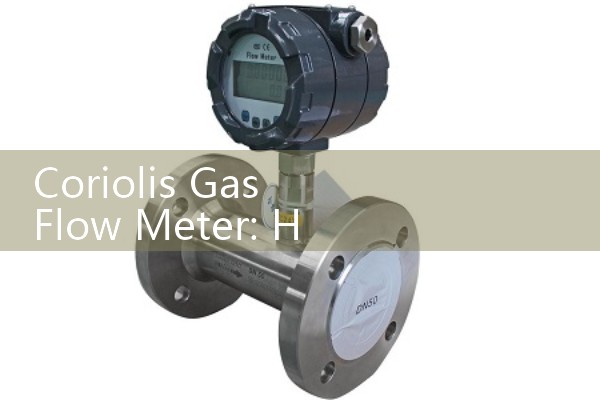
Most engineers skip the temperature sensor installation because the Coriolis meter already has an integrated PT1000 element inside the tube. The transmitter computes density with built-in temperature compensation and flags phase change events. In practice, this means one instrument replaces three devices and a flow computer. Maintenance drops to zero recalibration because there are no drift-prone diaphragms or moving parts.
Installation Notes for Vapor Applications
Mount Coriolis meters in liquid-free locations to avoid tube stress during start-up. Because vapor lines often accumulate condensate at low points, install the meter in a vertical pipe with upward flow. This configuration pushes condensate back into the main stream and keeps the tubes free of liquid accumulation. Support the meter body with rigid brackets, especially when connected to vibrating compressors.
Zero verification takes five minutes. Close the isolation ball valves, wait for pressure stabilization, and press the zero button on the display. No trim adjustments. A paint manufacturer in Vietnam runs a DN40 meter on solvent vapor at 6 bar and 110°C. After two years, the zero point had not shifted more than 0.01% of full scale. That kind of long-term stability cuts calibration costs.
When to Consider Other Technologies
Coriolis meters have a cost threshold. For low-pressure saturated steam below 5 bar where density variation is small, a vortex meter with temperature compensation can work for half the price. For extremely large line sizes above DN300, insertion thermal mass flow meters compete well. But as soon as you need billing accuracy, direct mass measurement, or immunity to density swings, Coriolis is the safe choice. We combine these technologies in a single site: our thermal mass flow meter for biogas is another option you can see on our site, which suits low-pressure gas with varying composition.
Contact Silver Automation Instruments
Describe your vapor conditions in a short message. Include operating pressure, temperature, pipe size, full-scale flow rate, and hazardous area classification. We respond within one working day with a recommended meter model, wiring diagram, and price. Email: [email protected], Tel: +86-135-1213-1526, WhatsApp: 86-135-12131526, WeChat: +86 13512131526. We ship from our Nanjing warehouse to Asia, Oceania, Latin America, Middle East, and Africa.
Frequently Asked Questions
Does a Coriolis meter need upstream straight runs like an orifice plate? No. Coriolis meters do not need flow conditioning. Install them directly after a valve or elbow. This saves valuable pipe rack space, especially on offshore platforms.
Can the meter measure both steam and gas without reprogramming? Yes. The transmitter measures mass flow regardless of fluid. You only need to set the process alarm limits for each media if density or temperature thresholds differ.
What happens with entrained condensate during start-up? The meter continues to measure mass flow. The accuracy might temporarily degrade from 0.15% to about 0.5% until the flow stabilizes, but it will not fail or give zero output.
Which certifications are available for explosive atmospheres? We supply ATEX Ex d IIC T6, IECEx, and FM certified transmitters for Zone 1 or Division 1 areas. The sensor itself carries a dual-certification and meets SIL 2 for safety-related applications.
How often do these meters need recalibration? In our experience, zero verification every 12 months is enough. Factory calibration values stay valid for at least five years for most clean vapor applications. If you see zero drift over 0.05%, a factory calibration service is available.
 Hot News
 Related AD