

『Flow Meter River Velocity Testing: Handheld Stream Gauges and Current Meters for Fieldwork』Related information(flow rotameter|digital flow meter|balo meter|hydraulic flow meter|volumetric meter|positive displacement meter|pitot tube flow meter|displacement meter|cfm meter|variable area flow meter|inline flow meter|differential pressure flow meter|calibrated flow meter|velocity meter|paddle wheel flow meter|oval gear flow meter|anemometer hvac|multiphase flow meter|doppler flow meter|thorpe tube flowmeter|heat flow meter)
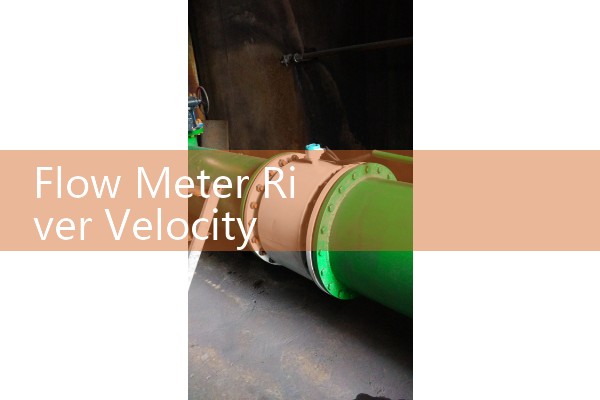
Flow Meter River Velocity Testing: Handheld Stream Gauges and Current Meters for Fieldwork
Quick Answer: Silver Automation Instruments supplies handheld stream gauges and current meters for river velocity testing. A typical unit measures water velocity in m/s, water depth in m, and discharge from a channel cross section in one site visit. Send your channel width, maximum depth, and expected velocity range and we will return a model and price quote within one working day.
Why Field Teams Use Handheld Current Meters
Field teams from water agencies and irrigation districts often work in remote catchments with no mains power. A handheld current meter fits into a backpack and runs on sealed rechargeable batteries. Each measurement takes less than five minutes at a marked cross section. The display shows real time velocity and the data logger stores time, date, and station ID for later reports.
We have seen this on customer sites many times. A water utility in the Philippines tested a three metre wide irrigation canal with a portable electromagnetic current meter. Velocity ranged from 0.05 m/s to 1.8 m/s across four points. The team used the average velocity method and logged total discharge in m3/h. This data gave them a baseline for pump scheduling in the dry season.
How River Velocity Testing Works
River velocity testing starts with a straight reach of uniform width. You divide the width into vertical sections and measure velocity at 0.2 and 0.8 of depth if the water is deeper than 0.75 m. For shallow water under 0.3 m, a single point at 0.6 of depth is enough. Most handheld stream gauges accept a wading rod, a cable suspension, or a sensor head with a rotating element.
A good meter logs velocity in m/s with at least 0.01 m/s resolution. Some units also record water temperature via PT100 and conductivity in µS/cm. Water viscosity near 1 cP does not change the velocity reading in most open channel flows. Turbidity and conductivity affect sensor choice more. The data export should include CSV files or Modbus RTU output for river telemetry. For sites with high turbidity or floating debris, we often recommend a handheld Doppler velocity meter because it has no moving parts that can jam. For clean water and low flows, a portable electromagnetic current meter works well and needs less maintenance.
Model Selection and Key Parameters
We ask customers to provide five parameters before quoting a handheld stream gauge. Channel width in m, maximum water depth in m, minimum and maximum velocity in m/s, water quality such as conductivity and turbidity, and the output they need such as SD card, Bluetooth, or 4-20 mA HART. These points reduce the risk of buying a meter that works in the lab but fails on a river bank in the rainy season.
Some customers ask for a pressure transmitter or a temperature sensor in the same package. A few portable flow meters also accept a PT100 input and display temperature in °C. For duties that require hazardou
Recommended Models from Silver Automation Instruments
For shallow streams and irrigation canals, we often recommend a handheld electromagnetic current meter with a wading rod sensor. It reads from 0.01 m/s to 5 m/s and includes a 128 MB data logger. For rivers with sediment, a Doppler velocity meter with a 2 MHz sensor gives reliable readings from 0.02 m/s to 10 m/s. For fixed monitoring, we also supply inline electromagnetic flow meters and ultrasonic flow meters for discharge pipes from DN15 to DN1000 with output options in m3/h or kg/h.
These field units do not give laboratory grade accuracy but they are practical for water resource planning. A handheld meter typically has an accuracy of plus or minus 2 percent of reading. That is acceptable for river discharge reports in most irrigation and environmental projects. If you need 0.5 percent accuracy on a closed pipe, an inline electromagnetic flow meter from Silver Instruments is a better fit.
Common Questions from Field Teams
Can a handheld current meter replace a full stream gauge station? No. A handheld meter gives spot checks and mobile discharge measurements. A fixed stream gauge station with a data logger and telemetry is needed for continuous water level and velocity data.
What is the minimum water depth for testing? Most handheld electromagnetic sensors need 0.05 m of water. Doppler sensors often need 0.05 m to 0.10 m depending on the beam angle. For very shallow flows, a wading rod with a small rotating element may still work.
How do you handle high turbidity or floating debris? Use a Doppler velocity meter or a sensor with no moving parts. Rotating element meters can jam or give false readings when weeds and plastic wrap wrap around the rotor. We have seen this happen in urban drainage channels in Malaysia after rain.
Do these meters support data export and SCADA? Most logging versions export CSV files via USB. Some support Bluetooth low energy for a phone app. For fixed telemetered sites, we supply flow meters with 4-20 mA HART, RS485 Modbus RTU, and pulse output.
Can you quote a handheld stream gauge for our site? Yes. Send us your channel width, maximum depth, velocity range in m/s, and water quality details. Our team will reply with a model, a data sheet, and a price quote within one working day.
Contact Silver Automation Instruments
To get a quote for a handheld stream gauge or current meter for river velocity testing, send your channel width in m, maximum depth in m, velocity range in m/s, water conductivity in µS/cm, and the output you need. You can reach our sales engineers by phone or WhatsApp.
Tel: +86-25-68650347
WhatsApp: +86-25-52155837
WeChat: +86 15365082610
 Hot Blog
 Related AD