

『Applications of Ultrasonic Flow Meter: Transit-Time Pipeline Testing Sizing Frameworks』Related information(flow rotameter|digital flow meter|balo meter|hydraulic flow meter|volumetric meter|positive displacement meter|pitot tube flow meter|displacement meter|cfm meter|variable area flow meter|inline flow meter|differential pressure flow meter|calibrated flow meter|velocity meter|paddle wheel flow meter|oval gear flow meter|anemometer hvac|multiphase flow meter|doppler flow meter|thorpe tube flowmeter|heat flow meter)
Applications of Ultrasonic Flow Meter: Transit-Time Pipeline Testing and Sizing Frameworks
Quick Answer: Transit-time ultrasonic flow meters handle clamp-on pipeline testing, flow verification, pump curve checks, and leak detection on DN15 to DN1200 pipes. They work best on clean liquids or fluids with low solids and low entrained gas. For a specific quote, send Silver Instruments your pipe size, fluid type, temperature, pressure, and flow range. We will return a clamp-on or inline meter selection with output and mounting details.
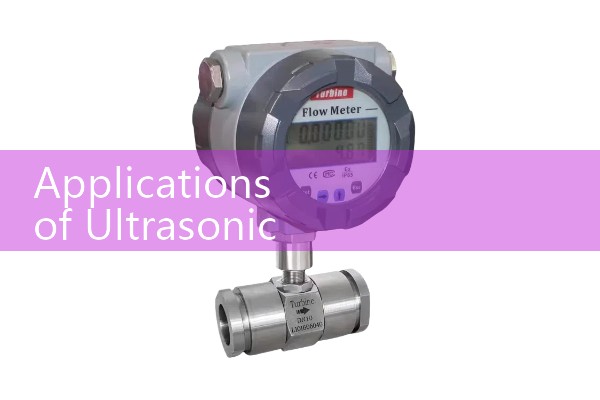
Pipeline testing with transit-time ultrasonic meters is common in water treatment plants, oil terminals, chemical factories, food processing lines, and marine cooling systems. The meter clamps on the pipe wall. It sends ultrasonic signals upstream and downstream. The time difference between the two signals shows the flow velocity. No pipe cutting is required. That reduces downtime and installation cost. A maintenance team can install a portable clamp-on meter in under one hour on most industrial pipes.
Why Transit-Time Meters Fit Pipeline Testing Better Than Inline Meters
Inline meters need flanges, welding, and shutdowns. Clamp-on transit-time meters do not. A technician in Vietnam tested a DN300 cooling water line last year. He installed the clamp-on sensors in 40 minutes. The plant stayed online. He compared the reading against a calibrated electromagnetic flow meter. The deviation was 0.8 percent. That is acceptable for a temporary verification job on a closed loop.
Transit-time ultrasonic meters also work on clean liquids with small amounts of bubbles or solids. Wastewater with up to 3 percent solids often works. But do not use clamp-on meters on slurries or liquids with a lot of entrained gas. The signal path degrades quickly. For those services, Silver Instruments offers electromagnetic flow meters or oval gear flow meters. A food plant in Australia measured chilled water at 2 degrees Celsius. The meter showed 85 cubic meters per hour. The liquid conductivity was 500 µS/cm. Ultrasonic meters do not need conductivity. That is why they also work on demineralized water and glycol loops.
Pipeline Testing Scenarios We See in Industrial Plants
Most engineers use clamp-on ultrasonic flow meters for four tasks. First, check the accuracy of existing inline meters. Second, verify pump output after maintenance. Third, find flow imbalances in district cooling networks. Fourth, measure temporary flow during plant revamps. A desalination plant in Saudi Arabia used a Silver Instruments clamp-on meter on DN400 seawater discharge piping. The goal was to confirm the high pressure pump curve. The reading at 840 cubic meters per hour matched the pump data within 1.2 percent.
In the oil and gas sector, transit-time meters test diesel transfer lines and fire water headers. A distributor in Chile checked a DN200 diesel line without opening the pipe. The meter measured 62 cubic meters per hour at 4.2 bar. The profile matched the loading rack meter. In practice, this method saves a full day of shutdown and drain work. For fire water lines, portable clamp-on meters also help verify flow during annual pump tests. The flow range often falls between 100 and 600 cubic meters per hour depending on pipe size.
For the chemical industry, many plants use clamp-on ultrasonic flow meters on acids and solvents. Teflon or PVDF pipe liners can affect the signal. But modern meters compensate for liner thickness and sound velocity. A paint manufacturer in Southeast Asia verified a solvent line at 35 centipoise viscosity. The meter tracked flow from 18 to 45 liters per minute. The plant used the data to set a dosing pump stroke. Here is the thing. Viscosity below 100 centipoise is generally safe for transit-time meters. Above that, an oval gear meter or Coriolis meter is a better fit. A chemical dosing line in Malaysia measured 1200 kilograms per hour of solvent. The reading stayed stable for eight hours during a batch test.
Sizing Frameworks for Transit-Time Ultrasonic Flow Meters
Do not start with the meter model. Start with the pipe. Measure the outer diameter and wall thickness. Check the pipe material. Carbon steel, stainless steel, copper, and PVC are all usable. Lined pipe requires a special setup. Note the straight run. Most clamp-on installations need at least 10 diameters upstream and 5 diameters downstream from elbows, valves, or pumps. If you have only 5 diameters upstream, accuracy drops. In many cases, a dual path meter helps reduce the straight run requirement.
Fluid type matters. Water, glycol, diesel, and light chemicals work well. Liquids
Next, check the flow velocity. Transit-time meters perform best between 0.3 and 8 meters per second. Below 0.1 meters per second the drift becomes noticeable. Above 10 meters per second, pipe erosion and signal noise increase. For a DN150 water line, a typical range is 30 to 300 cubic meters per hour. For a DN300 cooling water line, a typical range is 120 to 1000 cubic meters per hour. Use these ranges when you request a quote. Most engineers skip this part. They send a photo of the pipe and expect a price. But the flow range drives the sensor frequency and transmitter setting.
Silver Instruments supplies clamp-on transit-time ultrasonic flow meters with DN15 to DN1200 pipe compatibility. The transmitter supports 4-20 mA HART, pulse, and RS485 Modbus RTU. Typical accuracy is plus or minus 1.0 percent of reading on clean water. Repeatability is plus or minus 0.15 percent. The display shows flow rate, total flow, velocity, and signal strength. For temporary pipeline testing, we often recommend a portable clamp-on version with a rechargeable battery. For permanent installation, a wall mount transmitter with IP66 enclosure works well. For custody transfer or high accuracy billing, a Coriolis mass flow meter may be a better fit. But clamp-on ultrasonic meters are usually enough for pipeline verification and pump testing.
How to Test a Pipeline with a Transit-Time Meter Without Costly Mistakes
First, clean the pipe surface. Remove paint flakes, rust, and loose insulation. Apply acoustic coupling gel before mounting the sensors. Use the spacing bar to set the correct distance based on pipe diameter and wall thickness. The transmitter will calculate the expected spacing. Do not guess. Many field engineers skip this part. They get a weak signal and blame the meter.
Second, check the signal strength and sound velocity. A signal strength above 30 percent is usually stable. The measured sound velocity should match the fluid within 5 percent. If the velocity differs, check for pipe lining, temperature variation, or wrong wall thickness input. Third, record flow rate and total flow for 30 minutes. Compare the reading with the plant reference meter. If the difference is more than 3 percent, verify the straight run and pipe parameters. In practice, a stable signal and correct wall thickness solve most problems.
For pipeline sizing projects, gather all the data before you call. Tell us the pipe outer diameter, wall thickness, material, fluid, temperature, pressure, flow range, and whether the pipe is always full. We will reply with a specific clamp-on or inline meter selection. No generic brochure language. Send your data to Silver Instruments. Tel: +86-135-1213-1526, Whatsapp: 86-135-12131526, WeChat: +86 13512131526.
FAQ
Can a transit-time ultrasonic flow meter test a partially full pipe? No. The pipe must be full. For partially full pipes, use an open channel flow meter or a Parshall flume with an ultrasonic level sensor.
What is the minimum pipe size for clamp-on transit-time testing? Most clamp-on sensors work from DN15. For very small lines, use a low flow inline ultrasonic meter or an oval gear meter for viscous liquids.
Does pipe material affect the measurement? Yes. Carbon steel, stainless steel, and copper are straightforward. Concrete, fiberglass, and lined pipes need special sensor frequencies and sometimes a site test.
Can it handle hot water or steam condensate return lines? Hot water up to 180 degrees Celsius is possible with high temperature sensors and PT100 compensation. Steam or two phase flow is not recommended. Use a vortex flow meter for saturated steam.
How fast can Silver Instruments deliver a transit-time flow meter for pipeline testing? For standard clamp-on models, we usually ship within 7 to 10 working days. Portable units may need 15 days. Contact us with your application details and we will confirm the lead time.
Tell us your flow range, pipe size in DN, pressure in bar, temperature in degrees Celsius, and fluid type. We will recommend a clamp-on model, sensor mounting method, and output configuration. That is the fastest way to get a workable quote for transit-time pipeline testing.
 Hot Blog
 Related AD