

『Pressure Differential Flow Meter: Sizing Primary Orifice and Venturi Elements』Related information(flow rotameter|digital flow meter|balo meter|hydraulic flow meter|volumetric meter|positive displacement meter|pitot tube flow meter|displacement meter|cfm meter|variable area flow meter|inline flow meter|differential pressure flow meter|calibrated flow meter|velocity meter|paddle wheel flow meter|oval gear flow meter|anemometer hvac|multiphase flow meter|doppler flow meter|thorpe tube flowmeter|heat flow meter)

Pressure Differential Flow Meter: Sizing Primary Orifice and Venturi Elements
Quick Answer: Orifice and Venturi sizing starts with pipe diameter, fluid type, pressure, temperature, minimum flow, and maximum flow. Silver Instruments uses these inputs to calculate bore or throat size and the DP span for a 4-20 mA HART transmitter. Send us your pressure (bar), temperature (°C), pipe size (DN), and flow range for a checked size and price.
Sizing Inputs You Must Confirm
Before selecting an orifice or Venturi primary element, collect six data points. These are fluid type, pipe inner diameter, operating pressure, operating temperature, minimum and maximum flow rate, and viscosity if the fluid is liquid. For gas and steam, provide molecular weight or density and relative humidity if it is wet gas.
Many engineers skip viscosity on water and light chemicals. Water at 20 °C has a viscosity near 1 cP. Diesel at 40 °C may sit around 2 cP to 4 cP. If the liquid viscosity exceeds 50 cP or 100 cP, a differential pressure element may not be the best fit. In that case ask us about an oval gear flow meter for diesel and heavy oil.
For gas and steam, temperature compensation usually comes from a PT100 sensor in the pipe. Send us the normal and maximum temperature so the density value is not guessed. A gas line may be 0 to 600 kg/h at 6 bar on a DN80 pipe. The sizing changes if the same flow runs at 3 bar or 12 bar.
What the Primary Element Controls
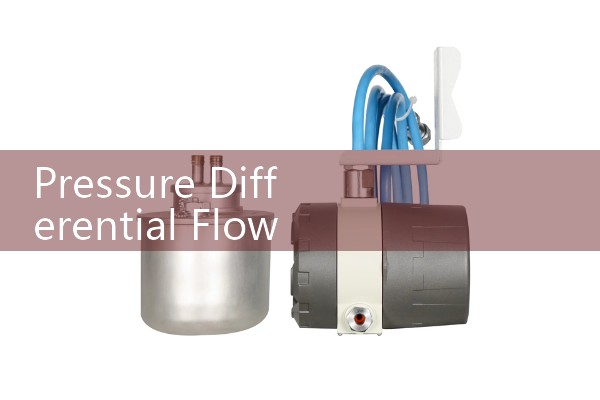
A differential pressure flow meter has two parts. The primary element sits in the pipe and creates a pressure drop. The secondary element is the DP transmitter that reads high and low side pressure. For an orifice plate, the hole diameter is the main sizing result. For a Venturi tube, the throat diameter is the main result.
Most engineers skip this part during budget pricing. They focus on the transmitter and forget that the plate bore or Venturi throat must match the flow range. If the bore is too large, the DP signal at low flow is too weak. If the bore is too small, permanent pressure loss rises and the process costs more pumping energy.
Orifice Plate Sizing in Practice
The bore calculation uses flow range, density, pipe inside diameter, and temperature. Most projects follow ISO 5167. The key output is beta ratio, which is the bore diameter divided by pipe inside diameter. A typical beta ratio is 0.3 to 0.7. Below 0.2 the signal is often noisy. Above 0.75 the uncertainty rises.
For example, a DN100 steam line at 10 bar with 0 to 3 t/h might start with a beta ratio around 0.55. The DP span at maximum flow could be about 200 mbar. This is a starting point, not a final number. The material and edge type depend on the fluid. Sharp edge orifice plates in 316L stainless work for clean dry gas. For wet and dirty gas, stainless with a drain hole or an annular chamber design may be better.
We have seen a paint manufacturer in Malaysia install a plate with a beta ratio of 0.68 on a DN50 solvent line. The transmitter range was 0 to 12 kPa. It worked but the low flow signal was only 0.4 percent of the calibrated span. A smaller bore improved the low flow reading. So do not accept a high beta ratio just to reduce pressure loss.
Venturi Tube Sizing and Pressure Loss
Venturi tubes are bigger in length and cost more than orifice plates. The benefit is lower permanent pressure loss. An orifice may lose 55 percent to 75 percent of the generated differential pressure. A Venturi typically loses 10 percent to 20 percent. This matters on low pressure gas feeds, long steam lines, and water networks where pump energy cost is high.
The throat diameter is calculated like an orifice bore but with a different discharge coefficient. Common line sizes are DN50 to DN600. For a DN150 water line at 25 °C and 0 to 220 m³/h, a Venturi with a 0.45 beta ratio may produce about 130 kPa differential at full flow. The permanent loss might be 13 kPa to 20 kPa. An orifice for the same flow could waste several times that loss.
Because pressure loss costs money every hour, do not size an orifice bore just for a lower purchase pric
Installation Straight Run and Tapping
No primary element works well without enough straight pipe. Orifice plates need 20D to 44D upstream depending on the fitting. Venturi tubes often need less upstream straight run than an orifice, but still follow the standard. Here is the thing. A primary element on a short spool with no straight run cannot meet its uncertainty.
In practice, a 90 degree elbow before a DN80 orifice may need 20D to 30D of straight run. If you have no space, an averaging pitot or a clamp-on ultrasonic meter may be a better option. Small lines under DN25 or DN15 have weak DP signals and high velocity. Ask us about a small line solution before you commit to a plate.
Pressure taps matter too. Flange taps, corner taps, and D and D/2 taps all follow specific standards. For pipe below DN50, small bore and impulse line freezing are common problems. Use a manifold valve and keep impulse lines short. For steam, fill the impulse lines with condensate and mount the transmitter below the pipe.
Materials, Pressure Ratings, and Transmitter Match
Silver Instruments supplies orifice plates and Venturi tubes in 316L stainless, carbon steel, PTFE lined, and Hastelloy. Pressure ratings go from PN16 to PN100. Flange standards cover ASME, DIN, JIS, and others. The primary element should be matched to a DP transmitter with a suitable span. Our standard matched transmitter has 4-20 mA HART output and 0.075 percent span accuracy. Common options include RS485, pulse, and HART diagnostics.
Do not size the plate and transmitter separately. A plate with a maximum DP of 25 kPa should not be paired with a transmitter ranged 0 to 250 kPa. The turndown and zero drift will hurt total error. Most DP meters have an accuracy of 0.5 percent to 1.5 percent of span when sized correctly. For hydrocarbon custody transfer, orifice plates can meet tight standards if the bore is calculated and documented correctly.
In ATEX Zone 1 or Zone 2 areas, specify intrinsically safe or flameproof transmitters. Silver Automation Instruments can supply the full assembly with impulse lines, manifold valve, transmitter, and remote display.
FAQ
What data do I need to size an orifice or Venturi flow meter?
Send fluid type, pipe size DN, operating pressure bar, operating temperature °C, minimum and maximum flow, and liquid viscosity cP. For gas, include density, molecular weight, or a full gas composition.
Which primary element has lower permanent pressure loss?
A Venturi tube has much lower loss, around 10 percent to 20 percent of DP. An orifice plate may lose 55 percent to 75 percent of DP. Choose Venturi for low pressure systems and high pumping cost.
What beta ratio should I use for an orifice?
Typical beta ratio is 0.3 to 0.7. Lower beta gives a stronger DP signal but more pressure loss. Higher beta saves pressure but weakens low flow response.
Can these meters measure gas and steam?
Yes. Orifice plates are common for natural gas, flare gas, and steam. Provide gas composition or density at operating conditions. In wet steam, use a steam quality correction or consider another meter.
Do you supply only the primary element or the full DP meter?
Silver Instruments supplies both. We can provide orifice plates or Venturi tubes with matched 4-20 mA HART transmitters, manifold valves, impulse lines, and remote displays.
Contact for a Sizing Check
Send us your pressure (bar), temperature (°C), pipe size (DN), and flow range. Include fluid name and liquid viscosity if you have it. We will return a primary element size, DP span, material option, and price. Tel: +86-135-1213-1526. Whatsapp: 86-135-12131526. WeChat: +86 13512131526. You can also visit flow-meter.com.au for more products from Silver Automation Instruments.
 Hot Blog
 Related AD