

『Siemens Mass Flow Meter: Thermal and Coriolis Gas Process Technologies』Related information(flow rotameter|digital flow meter|balo meter|hydraulic flow meter|volumetric meter|positive displacement meter|pitot tube flow meter|displacement meter|cfm meter|variable area flow meter|inline flow meter|differential pressure flow meter|calibrated flow meter|velocity meter|paddle wheel flow meter|oval gear flow meter|anemometer hvac|multiphase flow meter|doppler flow meter|thorpe tube flowmeter|heat flow meter)
Siemens Mass Flow Meter: Thermal and Coriolis Gas Process Technologies
Quick Answer: Siemens offers two main gas mass flow technologies: thermal dispersion meters for direct mass flow of clean, dry gases at low to medium velocities, and Coriolis meters for high-accuracy mass flow, density, and even some gas mixtures. Thermal meters excel in biogas, compressed air, and burner feed lines, while Coriolis meters dominate in custody transfer, hydrogen blending, and high-pressure gas dosing. Both provide direct mass flow output with no need for separate pressure or temperature compensation.
Why Two Technologies for Gas Flow
Most engineers start by looking at the pipe size and the gas composition. Siemens thermal mass flow meters use the principle of heat dissipation. A heated sensor and a temperature sensor sit in the gas stream. The electronics measure how much heat the gas carries away. This cooling effect is directly proportional to the mass flow. No moving parts. No need for pressure and temperature transmitters upstream and downstream. In many biogas plants across Thailand and Vietnam, we see these meters installed directly after the digester, measuring methane and CO2 mixtures with good repeatability.
Siemens Coriolis mass flow meters operate on a completely different principle. Inside the sensor, a tube or pair of tubes vibrates at a known frequency. When gas flows through, the Coriolis force causes a phase shift between the inlet and outlet sides. The phase difference gives direct mass flow. At the same time, the natural frequency change gives density. This matters a lot when the gas composition changes frequently. A chemical plant in Indonesia running a reactor feed loop with mixed gases will often choose a Coriolis meter for this reason.
Where Thermal Mass Flow Meters Win in Gas Processes
Thermal meters from Siemens work best on clean, dry gases. They are not suited for condensing vapors or liquids that can coat the sensor probes. In Southeast Asian breweries, we have seen many thermal flow meters on the CO2 recovery lines. The gas is clean. The flow range is wide, often 100:1 turndown. The price point is lower than Coriolis for larger pipe sizes. A typical application is monitoring compressed air consumption in a factory. The meter installs easily with a simple insertion probe and ball valve assembly. No need to cut the pipe and weld a spool piece.
Here is the thing: if your gas has traces of moisture or oil, a thermal meter can drift over time. Most engineers skip this part in the initial selection and later wonder why the readings are off. We always ask customers in the Middle East who run flare gas measurement to check their gas quality first. Thermal meters need a clean sensing surface. If the application is not clean, a Coriolis meter or a thermal meter with a purging system might be a better choice.
For biogas and landfill gas, Siemens thermal meters have a strong track record. A typical setup in the Philippines uses a SITRANS FST030 thermal meter with a DN65 probe. The transmitter provides 4-20 mA HART output to the plant PLC. The price for a complete thermal meter with local display and remote electronics often starts around USD 1,800 to 2,500, depending on the probe length and flange rating.
When Coriolis Meters Become the Default Choice for Gas
Siemens Coriolis gas flow meters are the workhorses for high-accuracy applications. A SITRANS FC430, for example, can measure gas mass flow with an accuracy of 0.1% of rate. This is worlds apart from typical thermal meter accuracy of 1–2% of reading plus 0.5% of full scale. But that accuracy comes at a higher cost. A DN15 Coriolis sensor with a transmitter can cost three to five times more than an insertion thermal meter.
So why do customers pay the premium? Process engineers in Australia and New Zealand often need to measure hydrogen-natural gas blends entering a turbine. Gas density changes daily based on the hydrogen fraction. A Coriolis meter outputs mass flow, density, and temperature simultaneously. The control system uses the density data to adjust burner settings. No external gas chromatograph needed for simple blending. This inline density function is the killer feature that thermal meters cannot provide.
Also, Coriolis meters do not care if the gas contains some liquid droplets or particles. Because the vibrating tube is closed and wetted, a small amount of condensate does not ruin the measurement. A paint manufacturer in Nigeria recently replaced a thermal meter with a Siemens Coriolis on a nitrogen and solvent vapor line precisely because of condensation issues. The meter paid for itself in six months by reducing batch rejects.
Direct Comparison of Siemens Thermal and Coriolis Gas Meters
For a quick selection, we look at four factors: gas cleanliness, required accuracy, pressure rating, and budget. Thermal meters are limited to gases with low moisture and no sticky residues. Coriolis meters handle bot
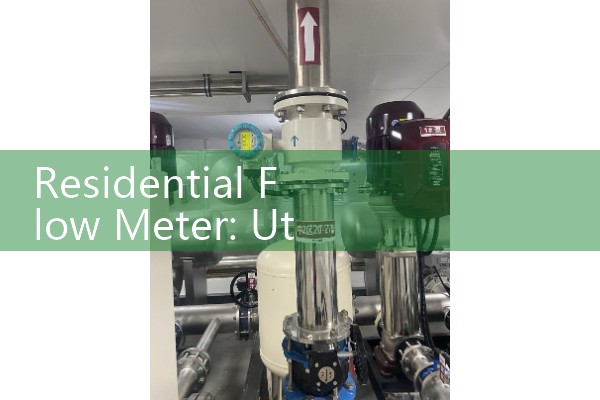
Installation is another difference. Thermal meters need a straight run of 15D upstream and 5D downstream for gases, unless a flow conditioner is used. Coriolis meters are nearly insensitive to flow profile, so you can install them right after an elbow. One customer in Argentina saved money on a tight skid because a Coriolis meter needed zero straight pipe.
Typical Gas Applications and Siemens Model Recommendations
Compressed air and nitrogen distribution: SITRANS FST030 thermal mass flow meter. It supports hot-tap insertion under pressure, which reduces downtime during retrofit. Sizes from DN25 to DN3000. Outputs include 4-20 mA HART and Modbus RTU.
Natural gas custody transfer: SITRANS FC430 Coriolis meter with MID MI-002 and OIML R137 approvals. This is important for countries that follow European standards. The meter provides multi-parameter output: mass flow, volume flow at base conditions, and density.
Biogas and landfill gas: SITRANS FST030 with a Teflon-coated probe and ATEX Zone 1 certification. Many projects in Malaysia and Indonesia use this configuration. The meter can handle gases up to 130 °C.
Hydrogen fueling and blending: SITRANS FC Coriolis meters with Hastelloy C-22 wetted parts. Density accuracy down to 0.5 kg/m³ helps detect gas composition shifts in real time. A typical H2 station in Australia uses a DN10 Coriolis sensor to fill vehicles at 700 bar.
How to Get a Quote for a Siemens Gas Flow Meter from Silver Automation Instruments
We ship Siemens gas flow meters and our own Silver Instruments brand thermal and Coriolis meters to more than 40 countries. Because we stock many models in Singapore and China, lead times are often shorter than going through Siemens local channels. We handle the export paperwork for countries like Nigeria, Brazil, and the UAE.
To receive a price and technical recommendation, send us your process data. Include gas composition, pressure in bar, temperature in °C, pipe size in DN, minimum and maximum flow rate in kg/h or Nm³/h, and any hazardous area certifications you need. Our engineers check the data against Siemens sizing software the same day. Email [email protected] or message us on Whatsapp at 86-135-12131526. We also provide commissioning support via WeChat video calls: add +86 13512131526.
FAQ About Siemens Thermal and Coriolis Gas Flow Meters
Can a thermal mass flow meter measure gas with high moisture content?
Thermal meters lose accuracy when water droplets or condensing vapors hit the heated sensor. The cooling effect changes unpredictably. For wet gases, a Coriolis meter or a vortex meter with multivariable compensation works better. In some biogas sites with a chiller and moisture trap upstream, a thermal meter still performs well.
What is the minimum flow a Siemens Coriolis meter can detect on gas?
This depends on the sensor size. A DN1 or DN2 Coriolis sensor can measure gas flow down to 0.02 kg/h. Larger DN50 sensors typically have a minimum measurable flow around 1-2 kg/h for gas. Always check the sensor zero stability specification, which is given in kg/h and is independent of fluid.
Do thermal flow meters need regular recalibration?
Yes. If the gas composition remains unchanged, a yearly verification is common. Many customers send the meter back for calibration every two years. Siemens offers ISO 17025 accredited recalibration at their factory. Field checks are possible with a reference meter or clamp-on ultrasonic meter, but this is not a full calibration.
Which technology is better for custody transfer of natural gas?
Coriolis mass flow meters are preferred because they meet international standards like OIML R137 and AGA 11. Thermal meters are not typically approved for custody transfer due to lower accuracy and no density output. A Coriolis meter paired with a flow computer can directly output corrected volume at standard conditions.
Can I use a Coriolis meter for a low-pressure gas vent line?
Coriolis meters work at low pressures but you must check the pressure drop. At very low pressure (e.g., 0.2 bar g), the back pressure from the meter can limit flow. Some designs, like straight single-tube Coriolis meters, have lower pressure drop and work better in vent applications. Always simulate the total pressure loss across the meter using the manufacturer sizing tool.
For more technical questions or to request a datasheet, email [email protected]. We will also send you installation guidelines and wiring diagrams for your specific Siemens model.
 Hot Blog
 Related AD