

『Refrigerant Flow Meter No Moving Parts: Slashing Wear with Solid-State Technologies』Related information(flow rotameter|digital flow meter|balo meter|hydraulic flow meter|volumetric meter|positive displacement meter|pitot tube flow meter|displacement meter|cfm meter|variable area flow meter|inline flow meter|differential pressure flow meter|calibrated flow meter|velocity meter|paddle wheel flow meter|oval gear flow meter|anemometer hvac|multiphase flow meter|doppler flow meter|thorpe tube flowmeter|heat flow meter)
Refrigerant Flow Meter No Moving Parts: Slashing Wear with Solid-State Technologies
Quick Answer: A refrigerant flow meter with no moving parts uses solid-state sensing, typically ultrasonic or thermal mass, to measure flow without internal wear components. These meters survive aggressive refrigerants, remain calibration-stable for years, and slash maintenance costs in cold storage, HVAC, and heat pump OEM lines.
Traditional flow meter designs put metal rotors, gears, or vibrating tubes right into the refrigerant stream. In ammonia-based cold storage plants in Thailand or CO2 cascade systems in Australian supermarkets, those moving parts degrade fast. Oil carryover, moisture, acid formation, and thermal shock wear out bearings and shafts within months. Many plant supervisors we speak with keep spare mechanical meters on the shelf just to swap out failed units every quarter.
Solid-state technologies flip that scenario. No gears. No impellers. No vibrating legs. The flow sensor sits outside the pipe or flush with the pipe wall, and the measurement principle does not rely on mechanical motion. That is the core reason a refrigerant flow meter no moving parts configuration works where mechanical meters fail repeatedly.
Why moving parts fail early in refrigerant service
Most refrigerants are not pure inert fluids. Ammonia attacks brass and copper. CO2 with trace water forms carbonic acid. R-290 propane carries compressor oil slugs. A mechanical flow meter with 316L internals still has a bearing race, a shaft, sometimes a magnetic coupling. Oil varnish builds up on the shaft. Stiction grows. Readings drift. Then the meter seizes. Here is the thing: you rarely notice the drift first. You notice when the evaporator starves or the liquid hammer starts banging pipes at 2 a.m.
In a large cold storage facility in Vietnam, the maintenance log showed three oval gear flow meter failures on the ammonia liquid return line in one season. Each replacement cost around AUD 900 plus four hours of labour. After the retrofitting to a clamp-on ultrasonic flow meter with no wetted moving parts, the same loop has run for 22 months with zero intervention. That kind of site data persuades even the most conservative engineering managers.
Solid-state technologies that fit refrigerant applications
Two main solid-state principles dominate refrigerant flow measurement today: ultrasonic transit-time and thermal dispersion. Ultrasonic clamp-on flow meters send paired bursts of sound through the pipe wall at an angle. The difference in upstream and downstream transit time is proportional to flow velocity. The sensor assembly is solidly potted, contains no moving components, and the piezoelectric crystals never touch the fluid. Our Silver Instruments transit-time meters handle pipe sizes from DN15 up to DN2000, detect flow rates as low as 0.01 m/s, and work with steel or copper pipes common in ammonia and glycol loops.
Thermal mass flow meters insert two RTD probes into the flow stream. One probe is heated, the other references the fluid temperature. The heat removal rate corresponds directly to mass flow. These units use solid-state sensor elements and hermetically sealed housings rated for pressures up to 40 bar. In HVAC chiller commissioning, a portable thermal mass meter with a clamp-on sensor set lets technicians confirm refrigerant charge without opening the system. No venting, no recovery cylinder, no environmental paperwork.
Both principles provide a 4-20 mA HART output and can optionally feed Modbus RTU to building management systems. We configure the meters at our Nanjing workshop for a specific refrigerant type and pipe material, so the flow computer already knows the sound speed or thermal coefficient you need. Most engineers skip the paper manual entirely when they see the pre-configured parameters on the OLED display.
Where slashing wear delivers the fastest payback
Ammonia two-stage systems in Asia-Pacific seafood processing plants see the fastest return. One factory in Indonesia operated four oil separators on the discharge line, yet oil carryover still reached the evaporator. A Coriolis mass flow meter with moving twin tubes was installed initially, but the vibration from reciprocating compressors caused zero drift every three weeks. Replacing it with a solid-state ultrasonic flow meter eliminated the drift and cut recalibration trips by 90%. Payback came in five months based on labour savings alone.
CO2 transcritical booster systems in European grocery chains have adopted ultrasonic flow meters as standard because the pressures exceed 100 bar and the cycle swings from subcritical to supercritical within minutes. No moving-part meter with a welded construction handles that thermal shock without fatigue cracks. Solid-state sensors without mechanical stress risers survive the pressure cycle indefinitely. We have seen this on customer sites many times when they test prototypes for 200,000 pressure cycle
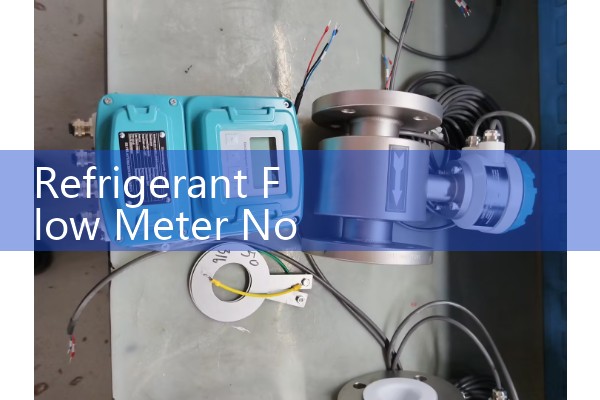
Heat pump manufacturers in China exporting to the Middle East are another fast-growing segment. They need in-line flow measurement for performance conformance and government rebate documentation. A magnetic flow meter will not work with refrigerant-grade oil, and a vortex meter introduces pressure drop that hurts the COP. A small-bore ultrasonic flow meter with DN10 to DN25 capability and PTFE lining slips right into the brazed plate heat exchanger loop. Because it has no flow obstruction and no moving seals, the pressure loss stays below 0.01 bar. Over the mandated 20-year equipment life, that small delta translates into thousands of dollars in reduced pumping energy.
Specific models and parameter ranges
For refrigerant liquid lines between DN15 and DN300 at temperatures from -40 °C to +150 °C, the Silver Instruments SUT-200 clamp-on ultrasonic flow meter provides direct mass flow computation when you enter the fluid density. Accuracy reaches ±0.5% of reading after field calibration with a known flow reference. Outputs include 4-20 mA, pulse, and RS485. The standard sensor set is IP68 and tolerates outdoor installations in desert solar cooling plants or tropical rooftop chillers.
For refrigerant gas and low-pressure vapour, the Silver Instruments STM-310 thermal mass flow meter with an insertion probe operates from -20 °C to +200 °C and up to 40 bar. It resolves flow rates as low as 0.3 Nm/s. The sensor element is a reference-grade PT100 thin-film RTD, and the flow computer compensates for temperature and pressure changes automatically. Many gas reclaim contractors in Latin America use this model to bill customers by the kilogram of R-22 or R-410A recovered.
Common questions from engineering teams
Can a no-moving-part flow meter handle oil-miscible refrigerants like R-407C?
Yes. Ultrasonic transit-time signals travel through oil-miscible liquid as long as the void fraction stays below 2%. For heavily oil-loaded suction lines, we recommend a thermal mass meter on the discharge gas side instead, or an inline ultrasonic meter with a low-frequency transducer optimized for two-phase tolerance.
What about ATEX Zone 1 certification for ammonia plant rooms?
Our ultrasonic flow meter transducers and transmitters come in Ex d and Ex ia versions certified to ATEX and IECEx. The signal cable runs in rigid conduit, and the electronics head is flameproof. Mention the zone classification early in the inquiry so we match the correct certificate.
Do I need a straight pipe run?
Clamp-on ultrasonic meters need 10D upstream and 5D downstream for fully developed flow. If space is tight, we can supply a flow conditioning plate or switch to an inline solid-state Coriolis alternative with no upstream straight run requirement. In practice, most chiller and compressor skids already have enough straight pipe between the isolation valve and the evaporator flange.
Can I measure refrigerant flow without cutting the pipe?
Yes. Clamp-on ultrasonic meters install from outside. Use acoustic coupling gel and stainless steel straps. The pipe surface must be clean and free of paint. We also rent portable clamp-on kits for short-term measurements during commissioning or troubleshooting. Send us the pipe material, outside diameter, and wall thickness to check feasibility.
What maintenance is needed after five years?
Nearly zero. The sensors have no wear parts, no bearings, and no shaft seals. For clamp-on units, you may reapply coupling compound every three to five years. For thermal mass insertion probes, a visual check on the probe tip for oil fouling suffices. Most sites do this during the yearly compressor overhaul and spend less than ten minutes on the flow meter.
Choosing a refrigerant flow meter no moving parts strategy pushes your system reliability forward by removing the root cause of mechanical meter failure. Solid-state technologies are not laboratory experiments anymore. They are proven across thousands of ammonia cold stores, CO2 transcritical racks, and heat pump production lines worldwide. When you realize the total cost of ownership includes labour, plant downtime, and refrigerant loss, the economics skew heavily toward a meter that simply does not break.
To get a specific quote or selection guidance, send us your operating pressure in bar, temperature range in °C, pipe size and material, refrigerant type, and required output signal. Our engineering team will propose the correct model with a typical lead time of two to three weeks. Reach us at [email protected], call +86-25-68650347, or message via WhatsApp +86-25-52155837. For quick photos of installations and wiring diagrams, add us on WeChat: +86 15365082610. Visit our main site flow-meter.com.au for specs, datasheets, and application guides.
 Hot Blog
 Related AD