

 Current position > Product detail
『How to Choose the Right Flow Meter Clamp for Non-Invasive Piping』Related information(flow rotameter|digital flow meter|balo meter|hydraulic flow meter|volumetric meter|positive displacement meter|pitot tube flow meter|displacement meter|cfm meter|variable area flow meter|inline flow meter|differential pressure flow meter|calibrated flow meter|velocity meter|paddle wheel flow meter|oval gear flow meter|anemometer hvac|multiphase flow meter|doppler flow meter|thorpe tube flowmeter|heat flow meter)
How to Choose the Right Flow Meter Clamp for Non-Invasive Piping
Quick Answer
Choose a clamp-on flow meter when you cannot cut pipes, stop the process, or risk contamination. Match the clamp sensor type to your pipe material and fluid. For metal pipes with clean water, transit-time ultrasonic clamps work best. For dirty fluids or thick-walled pipes, consider Doppler ultrasonic clamps. Silver Instruments supplies both types for pipe sizes from DN15 to DN3000.
Why Non-Invasive Clamp-On Flow Meters Matter on Real Sites
Most engineers skip this part. They look at a datasheet and pick a meter without asking one question. Will this sensor actually send a stable signal through my pipe wall? We have seen this on customer sites many times. A water treatment plant in Indonesia ordered a generic clamp-on ultrasonic meter for a DN200 carbon steel pipe. The pipe had a 6 mm bitumen lining. The signal never reached the second transducer. They called us after two weeks of frustration. The fix was simple. We recommended a Doppler clamp-on meter because the fluid contained enough suspended solids to reflect the signal.
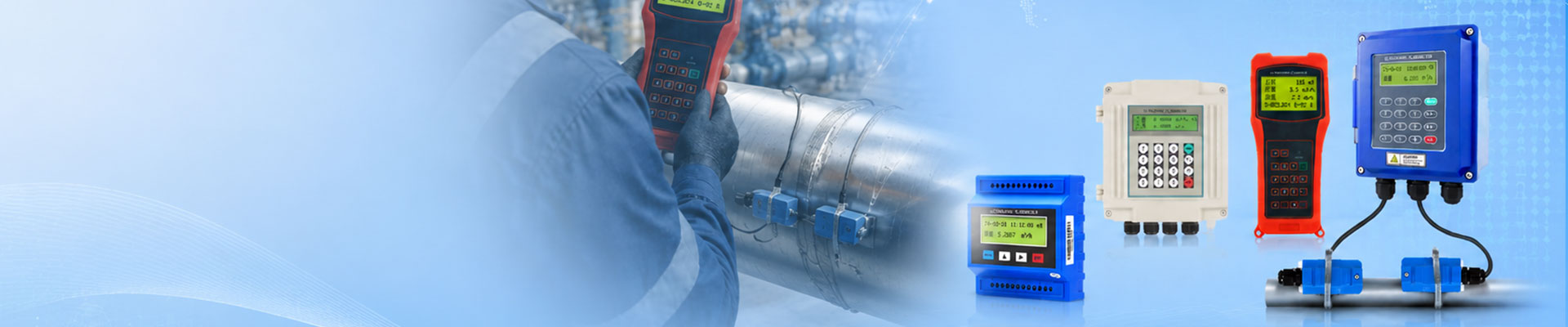
Clamp-on flow meters let you measure flow without cutting pipes or welding flanges. That matters in chemical plants, semiconductor fabs, and offshore platforms where welding permits cost more than the instrument itself. In practice, you can strap a pair of transducers onto a pipe in 20 minutes and get a flow reading with ±1% accuracy on a clean liquid.
Step One. Check Your Pipe Material and Wall Thickness
Not all pipes transmit sound the same way. Transit-time ultrasonic clamps need the pipe wall to pass ultrasound. Carbon steel, stainless steel, copper, and PVC work great. Concrete, wood, fiberglass, and HDPE with large air pockets cause trouble. If you have a lined pipe, measure the liner thickness. A 3 mm rubber lining on a DN80 steel pipe scatters ultrasound. The meter may still work if you lower the frequency to 0.5 MHz. We keep both 1 MHz and 0.5 MHz transducers in stock for exactly this reason.
Pipe diameter matters too. The transducer wedge must match the pipe curvature. For pipes smaller than DN25, you need a small-pipe transducer kit. For pipes above DN1200, you need larger transducers with a longer signal path. Silver Instruments clamps cover DN15 to DN3000. A food factory in Thailand uses our clamp-on meter on a DN15 chocolate transfer line. The pipe is polished stainless steel, fluid temperature 55 °C. They switch recipes three times a day. Cleaning in place runs at 85 °C for 20 minutes. The meter handles all of it without gasket leaks because there is no gasket.
Step Two. Know Your Fluid. Clean or Dirty Changes Everything
Transit-time meters need the fluid to pass ultrasound cleanly. That means less than 10 000 ppm suspended solids and less than 3% gas bubbles by volume. Demineralised water, fuels, oils, glycol, liquid chemicals all match this profile. If your fluid looks like raw sewage, dredging slurry, or drilling mud with 5% solids, switch to a Doppler clamp-on meter. Doppler needs particles or bubbles at least 100 microns in size. The meter reads the frequency shift from moving reflectors. Accuracy is lower, typically ±2% to ±5%, but it works where transit-time fails.
A copper mine in Chile asked us for a clamp meter on a tailings line. DN300 HDPE pipe, 45% solids by weight, pH 10 slurry. No transit-time meter could survive that signal loss. We supplied a Doppler clamp meter with stainless steel transducers and a coupling gel rated for pH 12. They installed it in one shift without stopping the slurry pump.
Step Three. Pick the Right Transducer Mounting Method
Most clamp-on meters use a rail or chain mount. For permanent installations, V-mount or Z-mount rails fix transducer spacing once and keep it stable. For temporary surveys, a magnetic clamp or ratchet strap works faster. In a refinery in Malaysia, the maintenance team uses a portable clamp meter with magnetic mounts to check cooling water balance across 12 heat exchangers. They move the meter every hour. They need repeatable spacing but fast release. We recommended a portable meter with a built-in spacer bar and magnetic brackets. The survey takes two shifts instead of two d
_600x400.jpg)
Temperature range of the pipe surface decides the couplant. Standard gel works from -40 °C to 150 °C. For pipes at 200 °C, you need high-temperature couplant paste or a solid coupling pad. For cryogenic lines at -180 °C, use a special low-outgassing couplant. Always ask your supplier for the right acoustic couplant for your surface temperature. A pharma plant in Argentina uses our clamp meter on a liquid nitrogen line. They apply a silicone-free couplant to avoid product contamination. The meter outputs 4-20 mA HART directly to their DCS.
Step Four. Output Options and Integration
Most industrial clamp meters output 4-20 mA with HART protocol. That drops straight into any PLC or SCADA. But some applications need Modbus RTU, pulse for totalization, or a digital display on site. Silver Instruments clamp meters offer 4-20 mA HART, Modbus, and a local LCD display as standard. A water distribution project in Nigeria uses pulse output to drive a remote totalizer in a control room 50 meters away. They ran a simple twisted pair cable. No power supply needed at the meter because the clamp meter is loop-powered.
For hazardous areas, choose an ATEX Zone 1 or IECEx certified meter. The transducer and transmitter must both carry the certificate. We supply clamp meters with Ex db and Ex ia ratings for gas and dust environments. Provide your zone classification when you send the inquiry.
Step Five. Verify the Straight Pipe Run and Installation Spot
Clamp meters need a stable flow profile. The general rule is 10 diameters of straight pipe upstream and 5 diameters downstream. But this varies. A 90-degree elbow, a partially open valve, or a pump discharge creates swirl. In those cases, increase the upstream run to 20D or use a flow straightener. A power plant in the Philippines installed a clamp meter 3D downstream of a butterfly valve. The reading jumped 15% when the valve throttled below 40% open. They moved the sensor to a longer straight section and the reading stabilised within 1%.
Also check the pipe for air pockets. Clamp the transducers on a horizontal pipe run at the 3 oclock and 9 oclock positions. Never mount on top if air collects there. Never mount on bottom if sediment builds up. We learned this lesson on a condensate return line in a dairy. The meter read zero every morning until we moved the transducers to the side.
Specific Models We Recommend
For clean liquids in metal pipes, the Silver Instruments SUF-300 transit-time clamp meter covers DN15 to DN6000 with ±1% accuracy. For dirty fluids, the SUD-200 Doppler clamp meter handles solids up to 40%. Both models ship with a full mounting kit, couplant, and a quick-start guide. Lead time from our Nanjing warehouse is 5 working days for standard configurations. Express shipping to Australia, UAE, Brazil, and Nigeria takes 3 to 5 days.
FAQ
Can I use a clamp flow meter on a vertical pipe? Yes. Vertical pipe with upward flow is even better because it stays full and air rises. Clamp the transducers on the side of the pipe.
Does pipe coating affect the reading? Yes. Loose paint, thick rust, or epoxy layers above 2 mm will block the signal. Remove coating at the transducer spots down to bare metal.
What is the minimum conductivity required? Zero. Clamp-on ultrasonic meters do not need conductivity. That is a common confusion with magnetic flow meters. Ultrasonic clamps work on deionised water, oils, and solvents with no conductivity at all.
Can Silver Instruments supply clamp meters for temporary rental projects? Yes. We offer portable clamp meters with a hard case, battery, and data logger. Many service companies use them for pump efficiency audits.
What pipe schedule can the meter handle? Transit-time meters handle schedules 10 to 160. For heavy wall pipes, we use a lower frequency transducer. Send us your pipe OD and wall thickness for a signal path calculation.
Send us your pressure (bar), temperature (°C), pipe size (DN), and flow range. Our engineers will propose the right clamp meter and transducer frequency within one working day. Email [email protected] or call +86-25-68650347. WhatsApp +86-25-52155837. WeChat +86 15365082610.