

 Current position > Product detail
『How to Set Oxygen Flow Meter: Following Physician Prescription Guidelines for Medical Gas Blenders』Related information(flow rotameter|digital flow meter|balo meter|hydraulic flow meter|volumetric meter|positive displacement meter|pitot tube flow meter|displacement meter|cfm meter|variable area flow meter|inline flow meter|differential pressure flow meter|calibrated flow meter|velocity meter|paddle wheel flow meter|oval gear flow meter|anemometer hvac|multiphase flow meter|doppler flow meter|thorpe tube flowmeter|heat flow meter)
How to Set Oxygen Flow Meter: Following Physician Prescription Guidelines for Medical Gas Blenders
Quick Answer: Read the physician prescription and the gas blender manual first. Set the oxygen flow meter to the exact liters per minute value on the prescription. Verify the oxygen concentration with a calibrated analyzer before the blended gas reaches the patient circuit.
This guide is for clinical engineers, medical gas blender assemblers, and procurement teams. It covers flow meter setup steps, key parameters, and the data needed for oxygen flow meter selection. Silver Automation Instruments supplies industrial and OEM flow measurement devices. Buyers must validate medical device compliance for patient gas contact.
1. Read the Prescription and Confirm the Blender Output Requirements
Most physician prescriptions state the oxygen flow rate in liters per minute. Some also state the fraction of inspired oxygen, like 40 percent or 60 percent. A medical gas blender mixes oxygen and medical air to reach that target. The oxygen flow meter controls the oxygen side of the mix.
In practice, a prescription may say 10 L/min at 50 percent oxygen. The air flow is balanced by the blender. The oxygen flow meter set point depends on the mixer design. Always check the blender OEM manual because some units set total flow and FiO2, while some set each gas flow separately.
Most engineers skip this part. The result is a wrong mix at the patient outlet. Confirm the required values before touching the valve.
2. Check Inlet Pressure, Temperature, and Gas Quality
Oxygen flow meters need stable inlet pressure. Common medical gas pipeline pressure is 4 bar. Some compact systems use 3 bar to 6 bar. The flow meter accuracy depends on inlet pressure and temperature compensation.
Measure the gas temperature before calibration. A typical test bench runs at 20 degrees Celsius to 25 degrees Celsius. Oxygen cleanliness is also critical. Use oxygen clean wetted parts. Avoid oil and grease on any connection. A small hydrocarbon residue can create an ignition risk in oxygen service.
3. Select the Right Oxygen Flow Meter Type
Rotameter style variable area meters are common on wall outlets. For OEM gas blenders and test benches, thermal mass flow meters give better repeatability. A thermal mass flow meter can measure mass flow directly in standard liters per minute. It can output 4-20 mA HART or RS485. It works well for oxygen and air because the gas composition is known.
Silver Instruments builds thermal mass flow meters with 316L stainless steel wetted parts. We have supplied units for oxygen blender test rigs in Vietnam and the Philippines. Common ranges are 0 to 10 SLPM, 0 to 50 SLPM, or 0 to 100 SLPM. The process connection can be DN15 or DN25. Accuracy is often plus or minus 1.5 percent of reading. Repeatability is plus or minus 0.5 percent of reading.
Here is the thing: a rotameter may cost less. But it drifts with temperature and pressure. For oxygen blending, the repeatability of a thermal mass flow meter often reduces rework and return visits.
4. Set the Flow Rate in Small Steps
Close the oxygen flow control valve before opening the supply. Then open the inlet isolation valve slowly. Let the pressure stabilize for a few seconds. Increase the flow in steps of 0.5 L/min or 1 L/min until the display matches the prescription value.
Do not ove
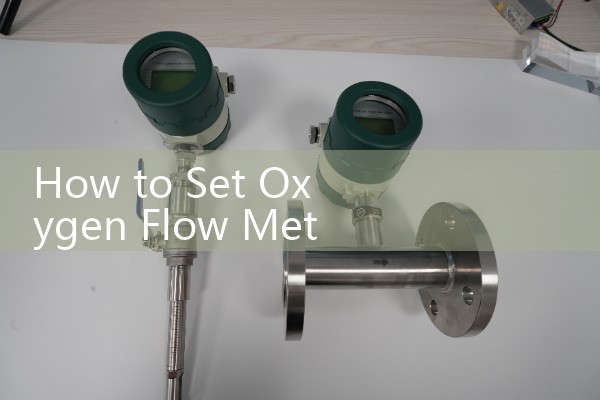
On digital mass flow meters, enter the set point through the local display or HART communicator. Compare the reading with a calibrated reference meter. The reference meter should have better accuracy than the unit under test.
5. Verify Oxygen Concentration and Alarm Limits
After the flow is stable, check the blended gas oxygen concentration with a calibrated oxygen analyzer. Wait for the analyzer stabilization time. The reading should match the prescription within the tolerance stated by the blender manufacturer. Common tolerance is plus or minus 2 percent oxygen.
Set the oxygen low and high alarm limits if the blender has alarm outputs. Verify the alarm response with a forced low flow test. This step catches a broken flow sensor or a failed pressure regulator before the blender leaves the bench.
6. Typical Model Selection for Oxygen Gas Blender Applications
Silver Instruments recommends a thermal mass flow meter for oxygen and air blending test benches. A typical model has a flow range of 0 to 50 SLPM, 4-20 mA HART output, DN15 process connection, 316L stainless steel sensor, and an LCD display. The power supply is 24 V DC. The operating pressure rating is 1.0 MPa or higher. Temperature compensation covers 0 degrees Celsius to 50 degrees Celsius.
For wall outlet type variable area meters, the tube and float materials must be oxygen clean. Check the scale units. Some scales show liters per minute of oxygen at standard conditions. Some show actual conditions. This difference matters in high altitude installations in Latin America or the Middle East.
FAQ: Five Key Questions on Oxygen Flow Meter Setup
What oxygen flow rate should I set? Only the physician prescription defines this value. Typical adult settings range from 2 L/min to 15 L/min. Neonatal settings may be below 1 L/min. Confirm the value and the blender total flow before adjustment.
Why does the oxygen flow meter reading drift? In most cases the inlet pressure changed or the gas temperature changed. Use a mass flow meter with temperature and pressure compensation. Check the upstream regulator and filter element.
Can I use an industrial flow meter for medical oxygen blending? Industrial flow meters can be used on OEM test benches and gas mixing skids. For patient gas contact, the full assembly must meet the medical device requirements of the destination market. Validate material cleanliness, calibration certificates, and approvals before purchase.
How often should we calibrate oxygen flow meters? Calibrate at least once per year. High volume production test benches may need calibration every 6 months. The calibration gas should match the service gas. Calibration certificates must show traceability to ISO 17025.
What information does Silver Instruments need for a quote? Send us your gas type, flow range in L/min, inlet pressure in bar, temperature in degrees Celsius, pipe size in DN, and output signal type.
For oxygen flow meter selection and quote, send your pressure in bar, temperature in degrees Celsius, pipe size in DN, and flow range in L/min. Contact Silver Instruments at Tel: +86-25-68650347, WhatsApp: +86-25-52155837, WeChat: +86 15365082610.